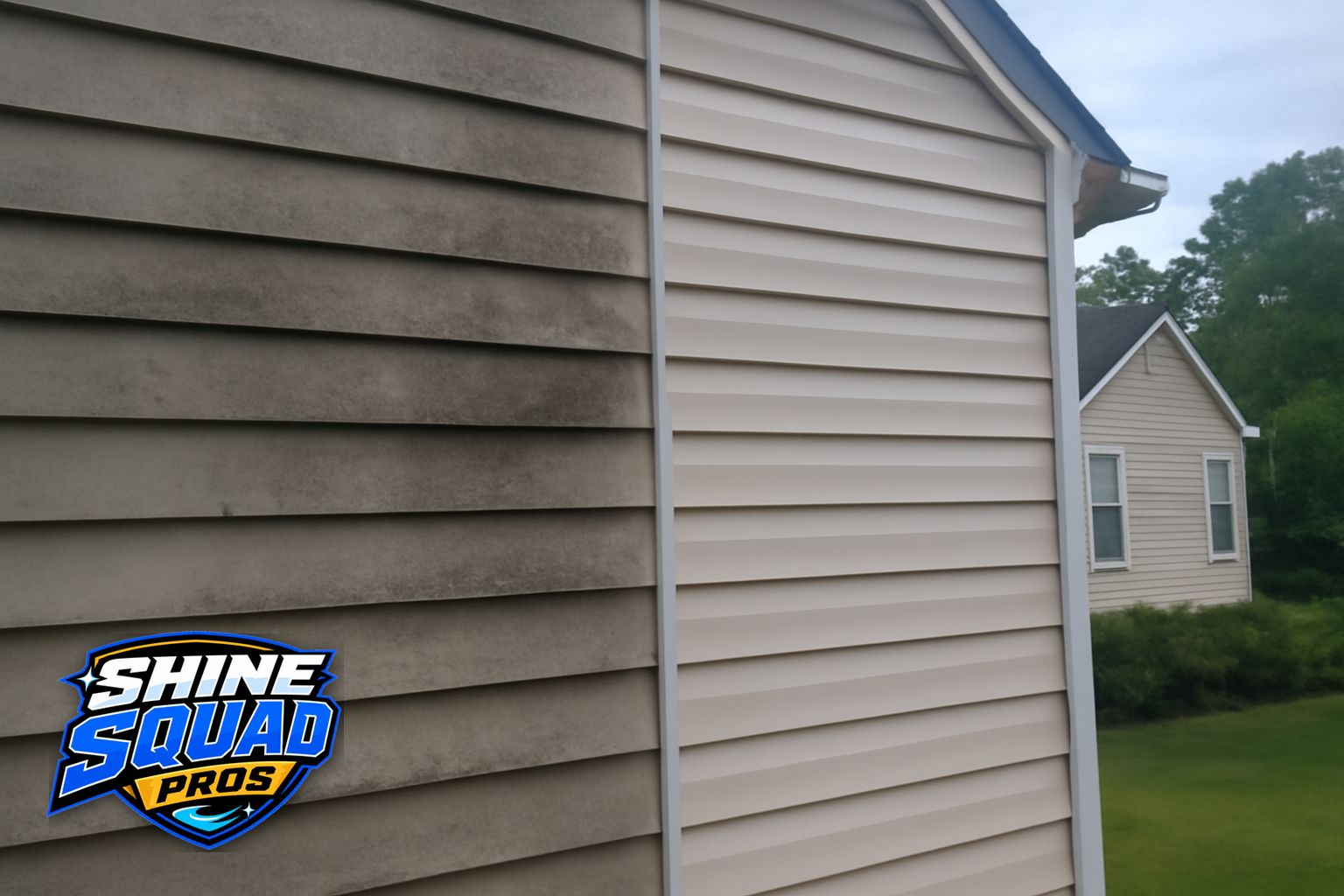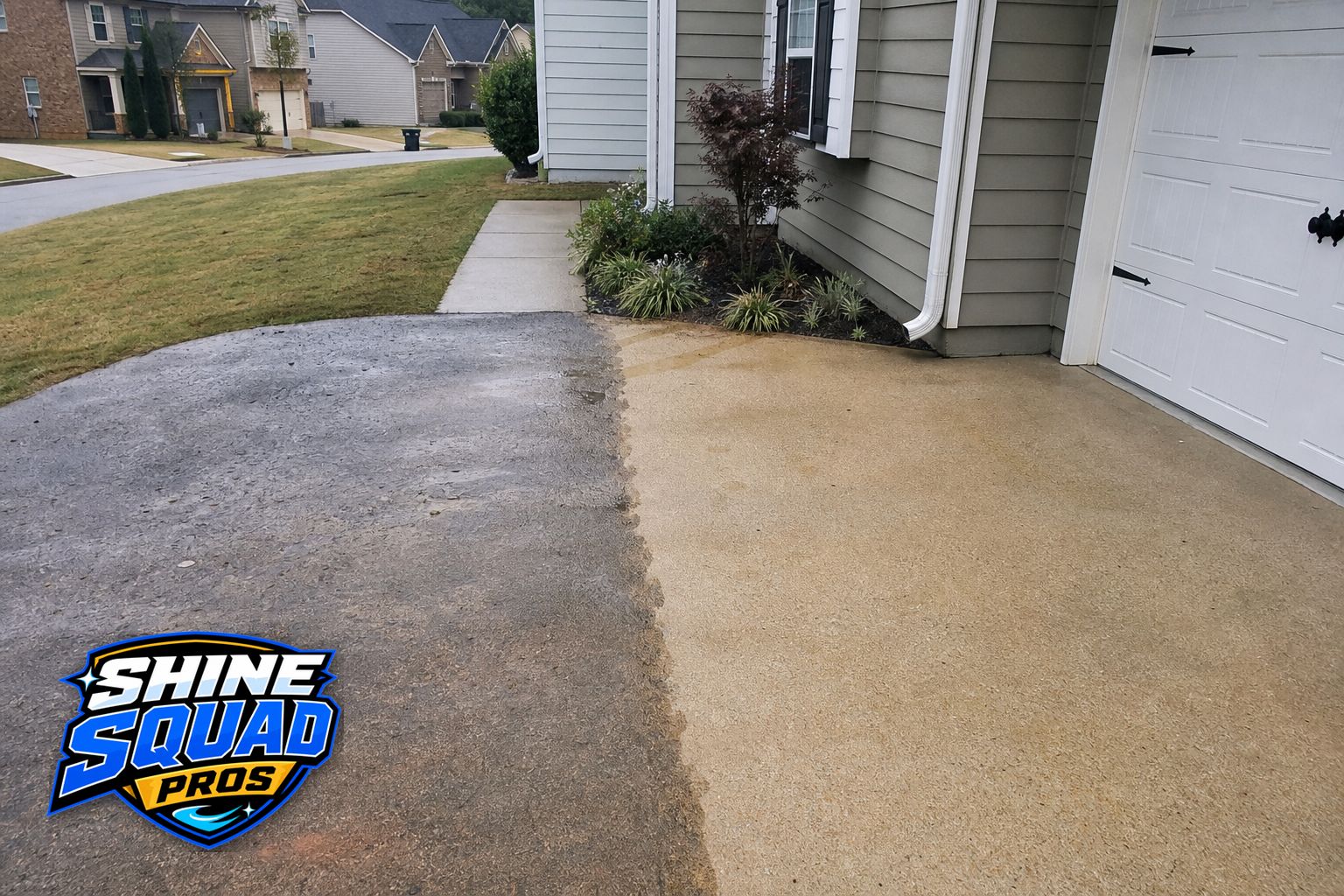
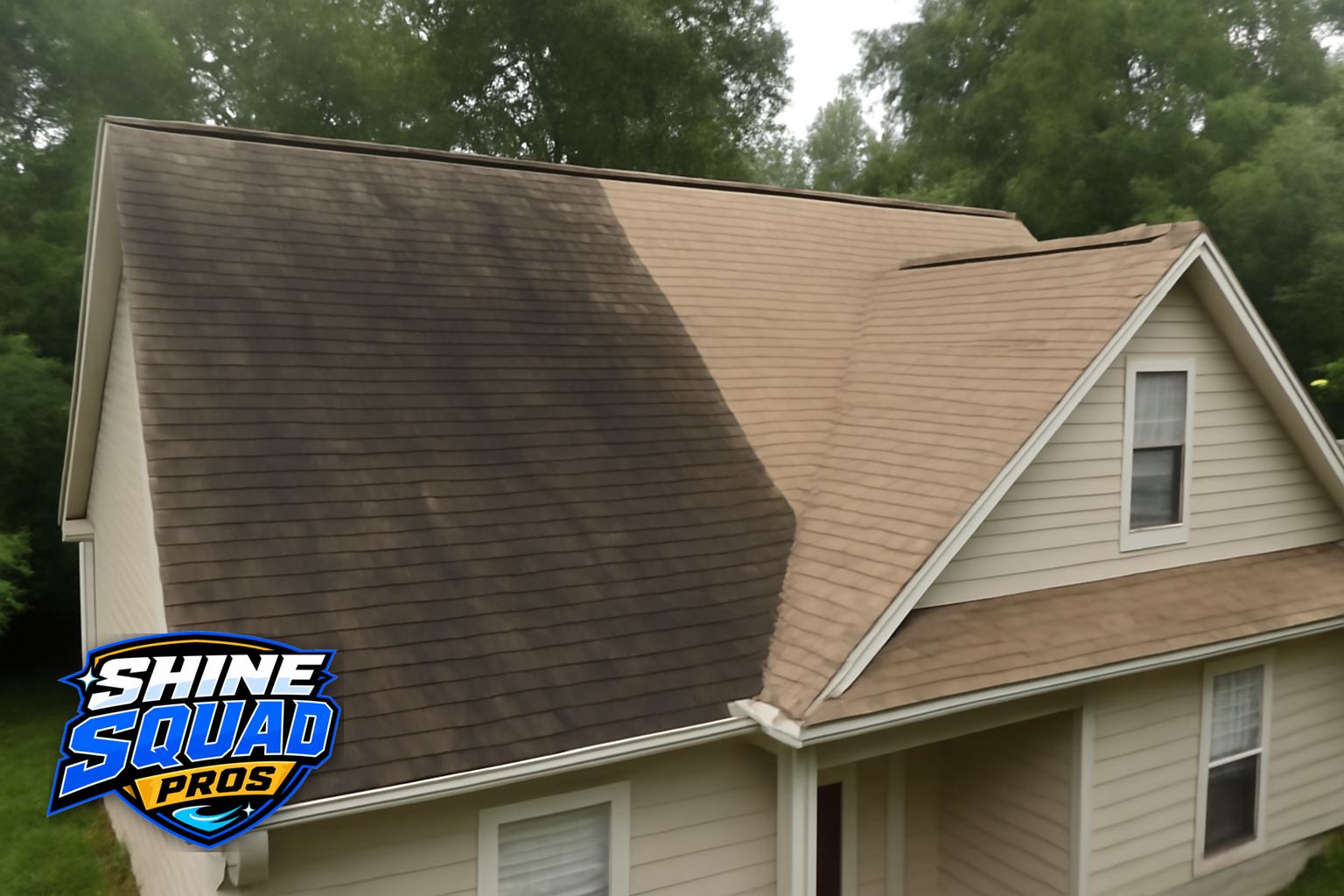
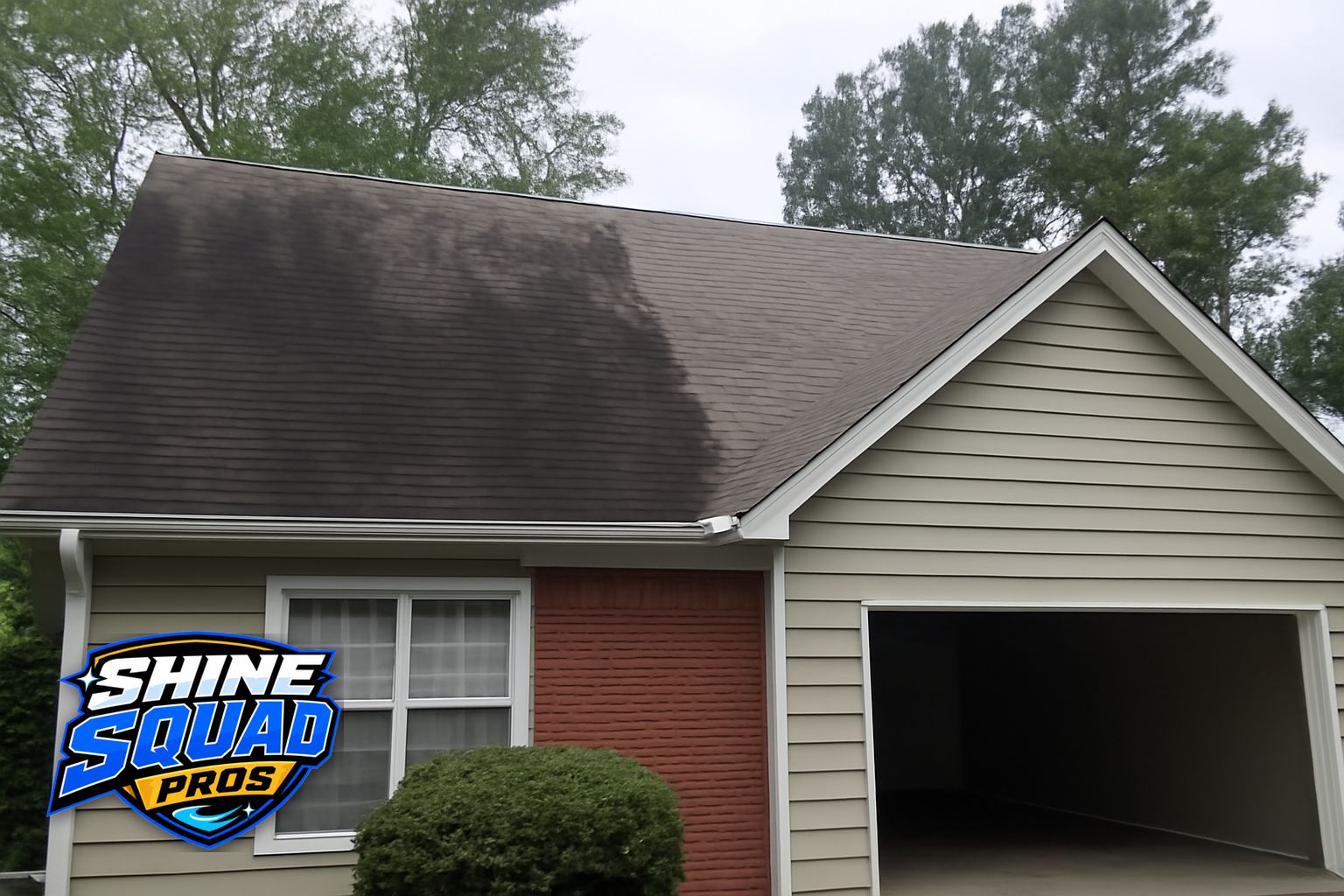
If you have noticed dark horizontal streaks running across your shingles or patches of green near the eaves, you are likely looking at biological growth that has been building up over time. For homeowners in Decatur, GA, roof cleaning is a practical maintenance step that can address this buildup before it spreads further. Shine Squad Pros serves Decatur as part of its Metro Atlanta exterior-cleaning territory and uses a low-pressure soft washing method designed for asphalt shingle roofs.
This guide walks through what causes roof staining, how the cleaning process works, how to compare soft washing against alternative approaches, and what questions to ask any company you consider hiring. The goal is to give you enough context to make a confident decision rather than guessing based on a quote alone.
What Causes Roof Staining and Biological Growth
The most common culprit behind dark roof streaks is a cyanobacterium called Gloeocapsa magma. It travels through the air, lands on roofing material, and can begin feeding on the limestone filler used in asphalt shingles. Over time, colonies grow and leave behind the dark pigmented sheath that shows up as streaks or blotches. Moss is a different problem. It tends to grow on the north-facing or heavily shaded sections of a roof where moisture lingers longer. Lichen, which is a combination of algae and fungus, can also appear and tends to grip the shingle surface more firmly than algae or moss alone.
None of these growths appear overnight. They can build up gradually, and in many cases a homeowner does not notice the staining until it is clearly visible from the street or a neighbor mentions it. The practical concern is that biological growth left in place may continue to spread across the roof surface over subsequent seasons.
How Soft Washing Works on Shingle Roofs
Soft washing is the approach that most roofing manufacturers and professional exterior-cleaning companies recommend for asphalt shingles. The process uses water delivered at low pressure, typically well below what a standard pressure washer operates at, combined with a cleaning solution that targets biological growth at the cellular level. The solution does the work; the water rinses the result away.
High-pressure washing is generally avoided on shingles because the force can dislodge the granules embedded in the surface. Those granules protect the underlying asphalt layer, and losing them through aggressive cleaning may cause more harm than the biological growth itself. Soft washing sidesteps that risk by relying on chemistry rather than force.
How a Professional Soft Wash Roof Cleaning Typically Proceeds
- Pre-visit assessment: A technician reviews the roof pitch, shingle type, and visible degree of staining or growth. This information shapes the cleaning solution concentration and application method.
- Surface and surroundings preparation: Plants, gutters, and any adjacent surfaces that may receive runoff are protected or pre-wetted before application begins. Downspouts are checked to confirm drainage is clear.
- Low-pressure solution application: The cleaning solution is applied at low pressure across the affected roof sections. The dwell time allows the chemistry to break down algae, moss, and lichen colonies.
- Rinsing: The roof is rinsed with low-pressure water to remove the loosened biological material and residual cleaning solution. Heavily calcified lichen may require a second treatment.
- Post-clean walkthrough: The technician confirms coverage and checks that runoff has cleared from gutters and ground-level surfaces before leaving the property.
Soft Washing Versus High-Pressure Washing for Roofs
Homeowners sometimes ask whether a standard pressure wash would achieve the same result faster. On a driveway or concrete surface, high pressure is appropriate and effective. On asphalt shingles, the calculus is different.
Soft Washing vs. High-Pressure Washing on Asphalt Shingles
- Uses low-pressure water delivery
- Cleaning solution kills biological growth at the source
- Preserves shingle granules
- Recommended by most roofing material manufacturers
- Appropriate for moss, algae, and lichen removal
- Longer dwell time required; results appear within days as growth dies
- Uses high-pressure water stream
- Physically blasts surface debris away
- Can dislodge protective granules from asphalt shingles
- Generally not recommended for shingle roofs
- Appropriate for concrete, pavers, and some metal surfaces
- Immediate visual change but may cause surface damage on shingles
What to Verify Before Hiring a Roof Cleaning Company in Decatur
Roof work carries real liability exposure. A technician who slips or causes water intrusion while on your roof is a genuine risk, and you want to confirm that the company you hire carries both general liability insurance and workers' compensation coverage before work begins. Ask to see a certificate of insurance rather than simply accepting a verbal assurance.
Beyond insurance, ask the company to describe its cleaning method specifically. A vague answer about pressure washing a roof surface is a signal worth investigating further. A clear answer about low-pressure application, solution dwell time, and rinsing procedure suggests a company that understands the material it is working on. At the company in Decatur, Georgia, these are the details we address directly when a homeowner asks about our roof cleaning process, because an informed customer makes a better long-term partner than one who is simply looking for the lowest price.
- Ask for a current certificate of liability insurance and workers' compensation coverage
- Confirm the company uses low-pressure equipment on asphalt shingles, not a standard pressure washer
- Ask what cleaning solution is used and whether it is appropriate for your shingle type
- Understand what the quoted price includes, such as rinsing, plant protection, and gutter checks
- Ask whether a second treatment is included if lichen does not release after the first application
- Get the scope of work in writing before any technician accesses the roof
When Roof Cleaning Makes Sense and When to Consult a Roofer First
Roof cleaning is a maintenance service, not a repair. If your roof has missing shingles, visible sagging, damaged flashing, or known leak points, those issues should be evaluated by a licensed roofer before any cleaning service is scheduled. Introducing water and cleaning solution to a compromised roof surface may worsen existing problems.
If the roof is structurally sound and the issue is biological staining or growth, cleaning is a reasonable next step. A clean roof is also easier for a roofer to inspect accurately if you are planning to have the roof assessed in the near future, since staining and debris can obscure the actual condition of the shingles.